
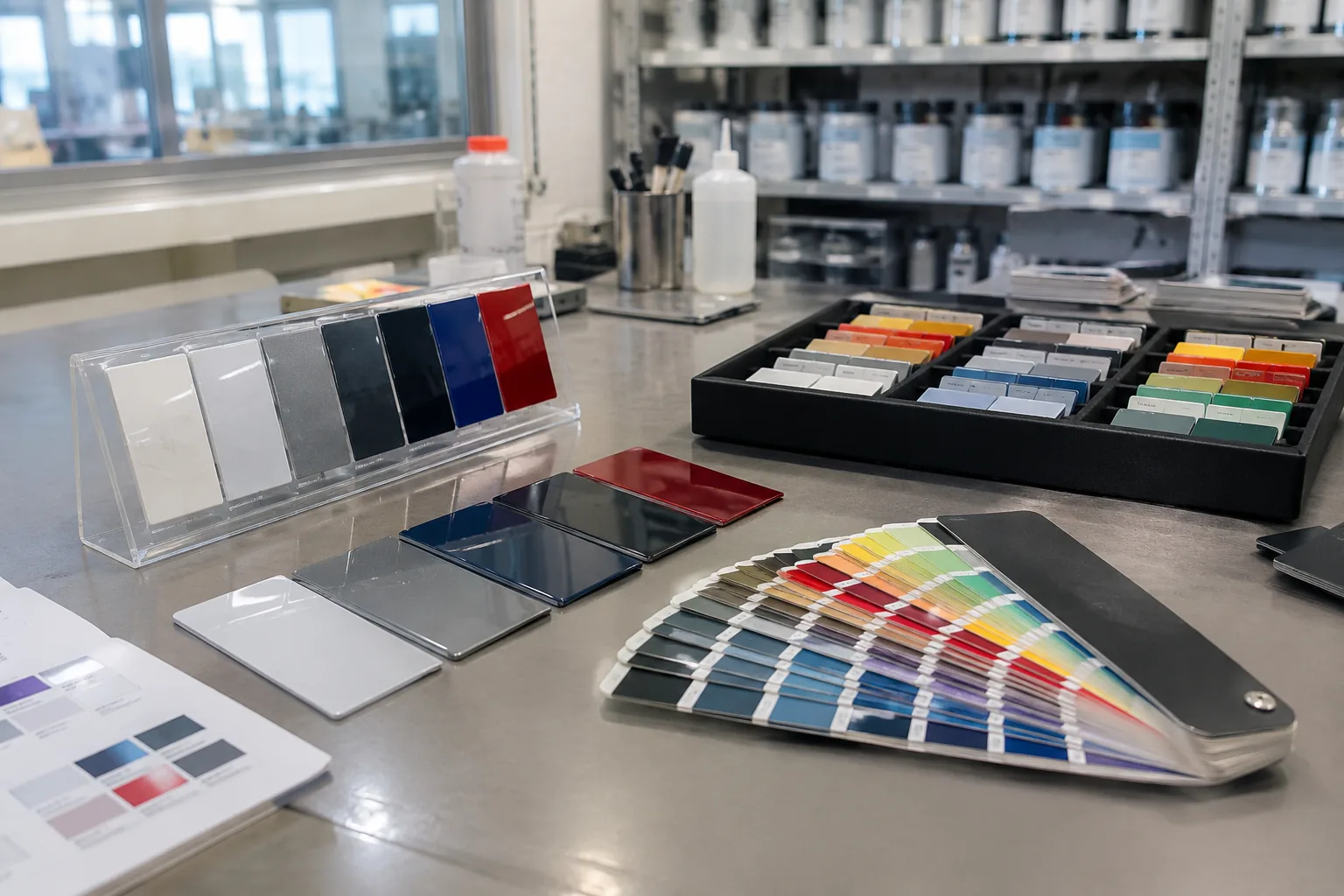
1K basecoat separates color from final protection
A 1K basecoat provides the color and effect layer. It is normally evaluated together with a compatible clear coat that supplies the final visible finish and protection.
- Suitable for solid and effect-color systems
- Requires a compatible clear-coat stage
- Color and effect orientation must be reviewed
2K topcoat combines color and direct gloss
A 2K direct-gloss topcoat is used with its specified hardener and, where required, thinner. It provides color and finish in the same topcoat stage rather than relying on a separate clear coat.
- Review the paired hardener
- Confirm application conditions
- Evaluate direct-gloss appearance
Choose around the market and repair process
Distributors should compare the systems against local repair habits, common colors, technician experience, climate and stocking strategy. Sample evaluation should use representative colors and a documented application method.
- Map common customer repair types
- Select representative evaluation colors
- Compare the complete material set