
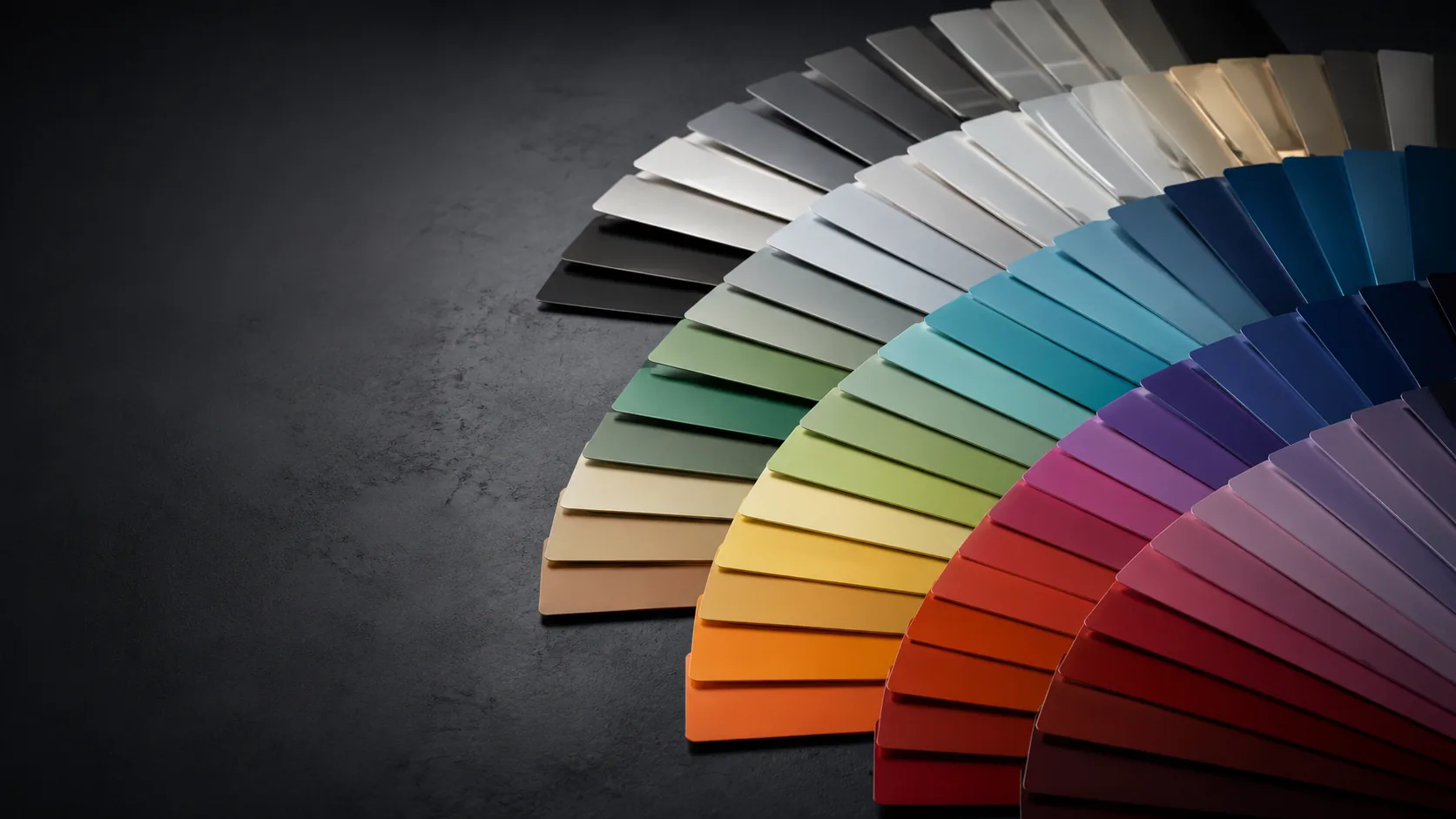
Solid colors depend on hue, value and chroma
Solid colors do not contain the same metallic or pearl effect particles, but they still require controlled mixing, application and comparison. Small differences can become more visible across a larger repair area.
- Compare under suitable lighting
- Use a consistent panel process
- Check the transition to the existing finish
Aluminium colors change with particle orientation
Aluminium effect can appear different as viewing angle and application change. Spray-out panels should therefore be reviewed from more than one angle rather than judged only face-on.
- Review face and flop
- Control the spray-out method
- Record the application setup
Pearl systems add another effect dimension
Pearl pigments can change color and brightness with angle and layer construction. Evaluation should follow the intended coating sequence and use representative panels before a repair process is accepted.
- Follow the intended layer sequence
- Compare multiple viewing angles
- Confirm the clear-coat stage